Billing and settlements
Billing and settlements: both ledgers closed on every load
What the broker owes the carrier and what the carrier owes the agency, on the same load. Then the weekly settlements: drivers, truck owners and dispatchers, each on the plan you set.
30-day free trial. No card needed. In English and Spanish.
-
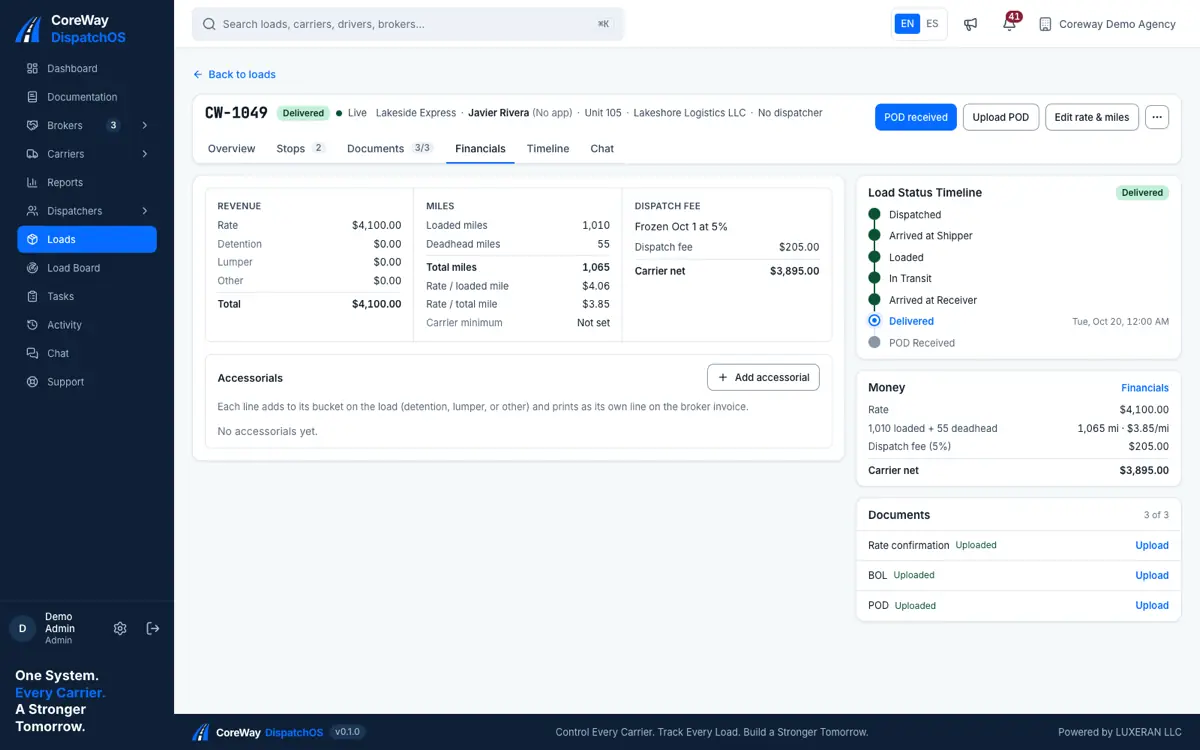
The money of the load, closed
Rate, accessorials, loaded and deadhead miles, rate per mile, the dispatch fee at your percentage and the carrier net. Two ledgers on one screen.
-
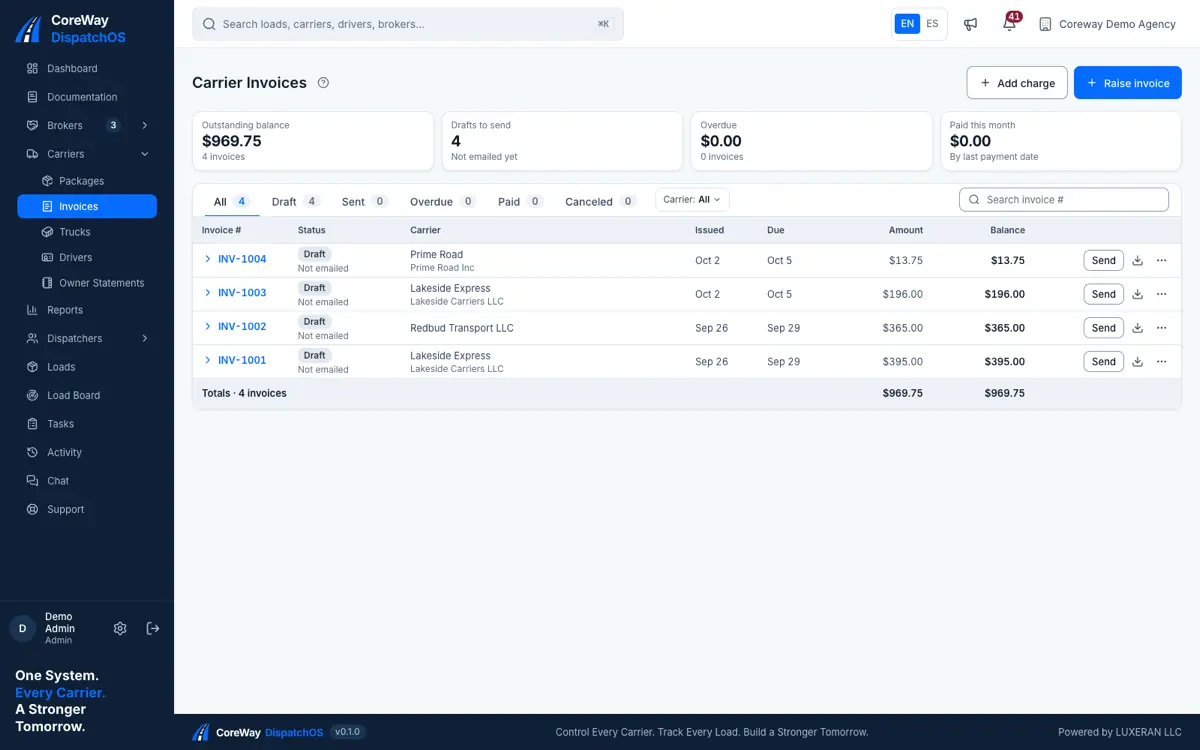
Carrier invoices with the fee
One invoice per carrier and period with its dispatch fees: drafts to send, outstanding, overdue and paid this month. A carrier package to print.
-
Weekly settlements
Driver settlements, owner statements for leased trucks and dispatcher pay, built every week, reviewed, finalized and marked paid with date, method and reference.
-
Broker side too
Broker invoices with the POD attached, receipts recorded as the money arrives, due dates from the broker's days to pay, and factoring companies with their remit-to on the invoice.
-
Financials on the load
Every amount lives on the load it belongs to. Accessorials such as detention or lumper, the miles, the rate per mile and the dispatch fee computed at the percentage in your settings, with detention handled as your dispatch agreement says.
- Dispatch fee percentage in Settings, applied to fees earned after a change
- Detention excluded or included by setting
- TONU handled on the load and in driver pay
-
Carrier invoices and the agency ledger
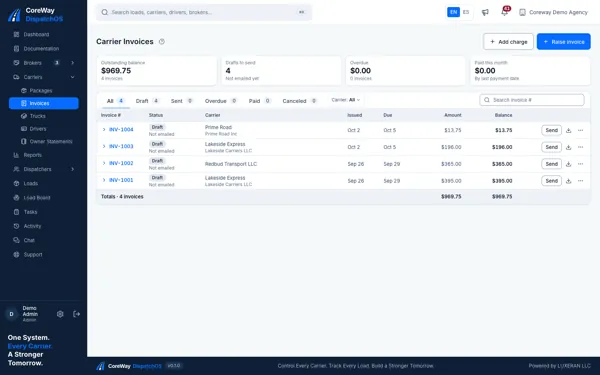
The agency ledger lists one invoice per carrier and period with its dispatch fees. You see the balance outstanding, the drafts to send, the overdue ones and what was paid this month, and print the carrier package.
- Per carrier and period
- Drafts, sent, overdue, paid
- Carrier package to print
-
Settlements: drivers, owners, dispatchers
Every week Coreway builds one settlement per driver the agency or an owner pays: his loads minus his deductions, hours where the plan needs them, lumper reimbursements. Owner statements do the same for a truck leased onto a carrier: the commission kept, the weekly charges such as insurance, deductions and credits, with a deficit carried forward if you choose. Dispatcher pay follows its own plan and bases.
- Pay plans per driver and per carrier he drives for
- Statements built on Friday, as drafts or finalized automatically
- Mark paid with date, method and reference; undo with a reason
Questions agencies ask before signing up
Does Coreway replace my accounting software?
No. It closes the money of each load and builds the invoices, statements and settlements. Payments are recorded as you make them; it moves no money.
How is the dispatch fee computed?
At the percentage you set in Settings, on the rate of the load. Detention is excluded by default, as most dispatch agreements say; you can include it.
When does a driver's load count as paid?
When the POD is received. Loads without a POD go to a later settlement.
We factor our invoices. Does that fit?
Yes. Add the factoring company, tick the NOA you hold, and the broker invoice of a factored load tells the broker to pay the factor. Coreway shows an estimate net of the factor's fee; the broker still owes the full amount.
Run your next load in Coreway.
Create your agency in a few minutes and use Coreway free for 30 days. No card needed.